In short
Sitges was above €4,800/m² in summer 2026, so many purchases cross €600,000, where Catalan transfer tax rises to 11% on the slice above. On a €750,000 resale home the tax is €76,500. A non-resident financed at 70% of the lower of price and valuation needs about €312,750 in cash.
The short answer
Sitges was above €4,800/m² in summer 2026, according to idealista. At that price, a family flat or a townhouse easily crosses €600,000, and two things happen that rarely happen together elsewhere in Catalonia. Transfer tax stops being a flat 10%. And the bank’s valuation can come in below the price you agreed.
Both are paid in cash, both appear late in the process, and both can be planned for. For a non-resident, add a third factor: Spanish lenders typically finance 60–70% of the lower of price and valuation, never guaranteed. On a €750,000 resale home with 70% financing, the cash you bring is about €312,750.
Why Sitges is different
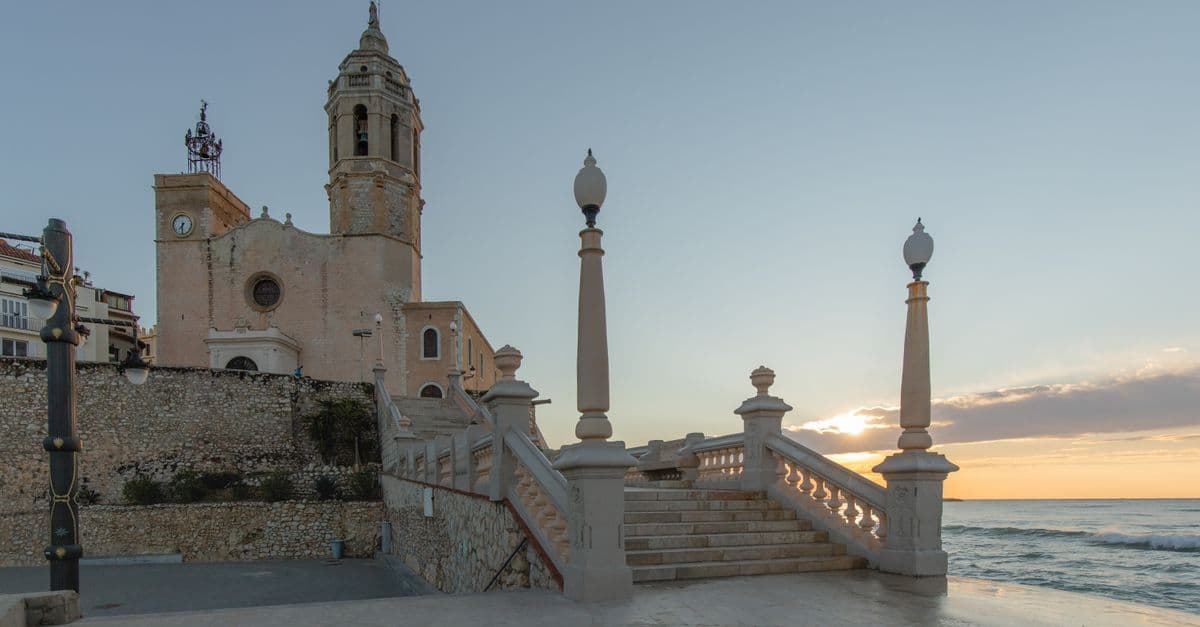
Sitges sits on the Garraf coast, south-west of Barcelona. It is on the R2 Sud commuter line of Rodalies de Catalunya, which runs along the coast to Barcelona-Sants and Passeig de Gràcia. That link, the beach and a long-established international community keep demand high from three kinds of buyer: people moving out of Barcelona, second-home buyers and buyers from abroad.
For the mortgage, the town’s price level matters more than its charm. A higher price means a larger deposit, a higher tax band and a valuation that is harder to support with comparable sales.
Catalan transfer tax in bands
Since 27 June 2025, Catalonia has charged transfer tax (ITP) on resale homes on a progressive scale, published by the Catalan Tax Agency. Each rate applies only to its own slice of the value, like income tax bands:
| Slice of the value | Rate |
|---|---|
| Up to €600,000 | 10% |
| €600,000 to €900,000 | 11% |
| €900,000 to €1,500,000 | 12% |
| Above €1,500,000 | 13% |
At Sitges prices, the second band is common. Calculated slice by slice:
| Price | Calculation | Transfer tax |
|---|---|---|
| €450,000 | 10% × €450,000 | €45,000 |
| €750,000 | €60,000 + 11% × €150,000 | €76,500 |
| €1,200,000 | €60,000 + €33,000 + 12% × €300,000 | €129,000 |
If someone told you to “count 10% for taxes”, they have left out €1,500 on a €750,000 home and €9,000 on a €1,200,000 one.
Reduced rates exist, such as 5% for some buyers under 36, but they are generally linked to a main residence and to income limits, so a holiday home does not normally qualify. The Catalan Tax Agency also lists a 20% rate for certain large holders and for purchases of whole residential buildings. A new build bought from a developer pays 10% VAT instead, plus stamp duty on the deed.
A worked example: €750,000 resale, non-resident buyer
| Item | 60% financing | 70% financing |
|---|---|---|
| Price | €750,000 | €750,000 |
| Mortgage | €450,000 | €525,000 |
| Deposit you fund | €300,000 | €225,000 |
| Transfer tax (bands) | €76,500 | €76,500 |
| Notary, registry, valuation and other costs (~1.5%) | €11,250 | €11,250 |
| Cash needed | €387,750 | €312,750 |
Plan the 60% column until a lender has assessed your case and the valuation is known. Under Law 5/2019, the lender pays the notary fees for the mortgage deed, its registration and the agency that processes it; you pay the valuation. Run your own figures in the purchase costs calculator, set to Catalonia.
The risk nobody mentions: the valuation
The lender does not finance what you pay. It finances a percentage of the lower of the price and the valuation. Mortgage valuations in Spain follow Order ECO/805/2003, and one of its core methods compares the home with similar properties on the market. In a rising market with few comparable sales, such as a sea-view flat in the old town or a house in Vallpineda, the valuer may not find enough evidence to support the agreed price.
| Scenario | Price | Valuation | 70% financed | Your deposit |
|---|---|---|---|---|
| Valuation at the price | €750,000 | €750,000 | €525,000 | €225,000 |
| Valuation about 7% below | €750,000 | €700,000 | €490,000 | €260,000 |
That is €35,000 more, usually discovered weeks after the deposit contract is signed. The transfer tax does not fall because the bank’s valuation is lower. Three protections cost little:
- Order the valuation early, as soon as the price is agreed, not at the end.
- Write it into the deposit contract. The financing condition should cover not only a refusal but also an offer reduced by a low valuation. Our guide to arras and mortgages in Catalonia explains the wording.
- Keep a buffer of 5–8% above the cash you have calculated.
What the lender asks for
A non-resident file takes longer than a resident one, and at Sitges prices the lender reads it more carefully, not less:
- passport and the NIE, the Spanish foreigner identification number; our guide to the NIE and a Spanish bank account explains how to get both;
- payslips or accounts and the tax returns from your country, usually for two years;
- bank statements showing income, savings and the deposit;
- loans and mortgages at home, with payments and balances;
- the origin of funds, because anti-money-laundering rules require the lender to trace the deposit.
As a working reference, the new payment plus what you already pay at home should stay within about 30–35% of net income. If you earn in pounds, francs or dollars, Law 5/2019 adds specific rules for loans in a currency other than your income; read our guide to foreign income and a Spanish mortgage.
Law 5/2019 also requires the binding offer to reach you at least ten calendar days before signing, followed by a free transparency meeting with the notary. That timetable cannot be compressed, so build it into the deposit-contract deadline. If you cannot travel for the signing, a power of attorney solves it.
Buying from a non-resident seller
Sitges has many foreign owners, so the seller may be a non-resident too. When the seller is a non-resident without a permanent establishment in Spain, the buyer must withhold 3% of the price and pay it to the Spanish Tax Agency, under article 25.2 of the Non-Resident Income Tax Act. On €750,000 that is €22,500, deducted from what the seller receives. If the seller is a non-resident individual, the buyer also becomes the substitute taxpayer for the municipal tax on the increase in land value, the plusvalía, so it has to be settled at completion. Our partner lawyer confirms the seller’s status and both payments.
After you buy
As a non-resident owner, you will file Spanish non-resident income tax every year, whether or not you let the home. The Spanish Tax Agency applies 19% to residents of the EU, Iceland, Norway and Liechtenstein, and 24% to everyone else. Our guide to non-resident taxes after buying explains the imputed income, IBI and the deadlines.
How RCG coordinates it
RCG Finance is a real-estate credit intermediary registered with the Bank of Spain under number E760. Our office is in Salou, on the Costa Daurada, and we work with non-resident buyers across Catalonia, including Sitges and the Garraf, in English, Spanish and Catalan. Most of the work happens by video call and email, and our team attends the notary signing in person.
We prepare the file once and present it to several lenders that genuinely finance non-residents, so the negotiation is real. On a large loan, small differences in the rate add up to thousands of euros. Around the mortgage we coordinate:
- our partner lawyer, for the NIE, the bank account, the power of attorney, the deposit contract, the withholding and the review of the property;
- a currency exchange partner, to convert and send the deposit and costs in euros, providing transfer confirmations that form part of the payment trail. Our guide to moving money to Spain explains how.
Our initial assessment is free, and any fee is explained in writing before you contract anything. We do not give legal or tax advice.
What to do next
Size the cash with the purchase costs calculator, and gather your documents with the non-resident mortgage checklist. If you are still comparing coasts, the areas guide sets Sitges against the Costa Brava, the Costa Daurada and the south; for the north of Catalonia, see our guide to non-resident mortgages on the Costa Brava.
When the numbers work, our non-resident mortgage service puts the file in front of the right lenders.
Sources and review
Prepared by the RCG Finance editorial team (RCG 2026 S.L., Bank of Spain register of credit intermediaries no. E760) and reviewed by Rafael, founder of RCG Finance and former debt and M&A advisor at KPMG and PwC, under our editorial standards. Last source review: 22 September 2026.
- idealista — Sale price evolution in Sitges
- Catalan Tax Agency — Property transfer tax rates
- Spanish Official Gazette — Order ECO/805/2003 on property valuation for financial purposes
- Spanish Official Gazette — Law 5/2019 on real-estate credit
- Spanish Official Gazette — Non-Resident Income Tax Act, article 25.2
- Spanish Official Gazette — Local Finance Act, article 106.2 (plusvalía substitute taxpayer)
- Spanish Tax Agency — Non-resident income tax rates
- Rodalies de Catalunya — Line R2
Frequently asked questions
How much cash do I need to buy in Sitges as a non-resident?
Plan on 30–40% of the price plus taxes and costs, because Spanish lenders typically finance 60–70% of the lower of price and valuation for a non-resident. On a €750,000 resale home with 70% financing, that is about €312,750. It is never guaranteed.
Is transfer tax in Sitges 10%?
Only up to €600,000. Catalonia charges transfer tax in bands, each rate on its own slice: 10% up to €600,000, 11% from €600,000 to €900,000, 12% from €900,000 to €1,500,000 and 13% above. On €750,000 that is €76,500. Reduced rates are generally linked to a main residence.
What happens if the valuation comes in below the price?
The lender finances a percentage of the lower of the two figures, so the gap is paid in cash. On a €750,000 purchase valued at €700,000, 70% financing falls from €525,000 to €490,000, and you need €35,000 more. Ask for the valuation early and cover it in the deposit contract.
Does RCG have an office in Sitges?
No. RCG Finance is based in Salou, on the Costa Daurada, and works with buyers across Catalonia, including Sitges and the Garraf. Documents are exchanged online and our team attends the notary signing in person.